In advanced food manufacturing, one misplaced pallet can mean a recall. A soy ingredient stored in the wrong rack, or a lot issued to production without a record, puts customers, certifications and margins at risk.
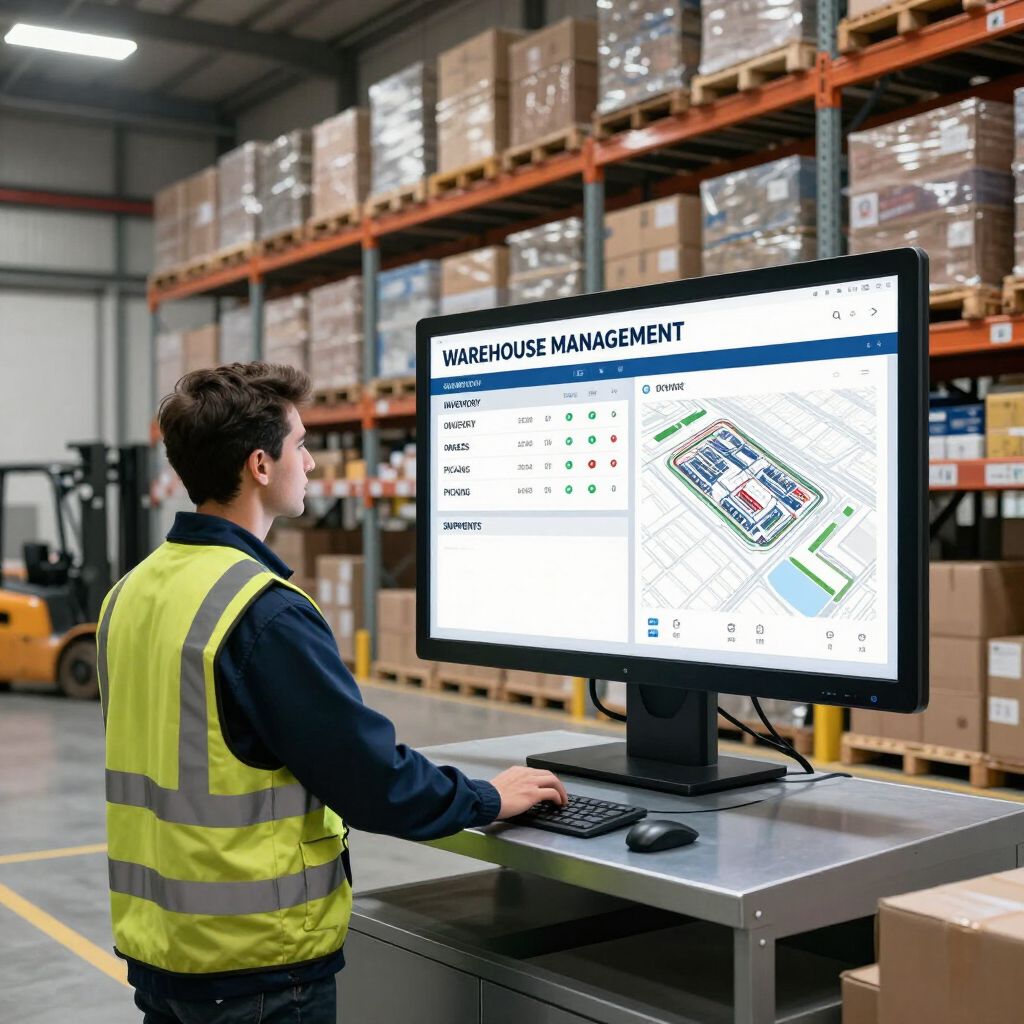
We recently delivered TBO4 WMS for an advanced food manufacturer running Acumatica Manufacturing across several production buildings. They had three goals: enforce allergen segregation, achieve full lot traceability from receipt to finished goods, and capture accurate production data on the floor without slowing operators down.
This post walks through what we built, and why the approach works for any manufacturer that has outgrown spreadsheets and paper pick lists.
The problem: the ERP knows the rules, the floor does not
Acumatica held the right data. Every raw material was tracked by lot and expiry, and every item carried its allergen profile. The gap was on the warehouse floor, where that data was not being enforced at the moment it mattered.
- Allergen segregation relied on people. Operators had to remember which ingredients could share a pallet, a bin or a rack position.
- Lots were recorded after the fact. Material issued to the weighing room or the bottling line was keyed in later, so traceability depended on paperwork.
- Production status was invisible. Planners in Acumatica could not see whether materials for a work order were still on the shelf, staged, or already consumed.
The result was risk on every movement and a growing admin load as volumes increased.
The solution: set it once in Acumatica, enforce it at every scan
The design principle was simple. Master data stays in Acumatica, and TBO4 enforces it on the floor.
- Allergens as an item attribute. A multi-select allergen attribute was added to the Acumatica item master. It syncs into TBO4 read-only, so there is no double entry and one source of truth for every ingredient, including customer-supplied materials.
- Lot and expiry on everything that matters. Raw materials, semi-finished and finished goods are tracked by lot and expiry. Packaging is tracked by quantity only.
- Every location scannable. Bins were relabelled to a Building, Aisle, Rack, Level and Position structure, so TBO4 knows exactly where each lot sits.
This is where TBO4's flexibility pays off. Rather than hard-coding rules, TBO4 reads the attributes the manufacturer already maintains in Acumatica and uses them to drive the warehouse workflow.
How it works on the floor
1. Receiving: allergen checks before a pallet is built
Every inbound pallet gets a licence plate (LPN) at receipt. When an operator adds an item, TBO4 checks its allergen profile against everything already on that pallet. Items only share a pallet when their allergen profiles match exactly. TBO4 suggests the lot number, the operator confirms quantity and expiry, and a GS1-128 label is printed carrying item, lot and expiry.
2. Putaway: no mixed allergens in one rack position
Putaway is a scanned bin-to-bin transfer by LPN. Before stock is placed, TBO4 checks the whole rack position, not just the bin. If peanut is stored on level 1 of rack R10, position P05, soy cannot go on level 2 of that same position. The operator is told to choose another location. The same check runs on every later bin-to-bin transfer.
3. Staging: picking to the production order
A released Acumatica production order appears in TBO4 Pick & Pack Manager, one pick per material issue. Operators build SSCC-labelled pallets for each work order and move them to a staging bin. On completion, TBO4 transfers the stock in Acumatica and allocates the exact lots and bins to the material issue.
4. Consumption: only the right lots, from the right bin
In the production room, operators scan the staged SSCC or items. TBO4 only accepts lots held in that work order's production bin, so the wrong material cannot be consumed. Actual lots and quantities, in any unit of measure, are written back to the material issue.
5. Receipt from production
The next phase closes the loop. Finished goods are received pallet by pallet at the wrapping station, labelled, and confirmed by a supervisor, flowing straight back into Acumatica.
At each step, a pick status on the Acumatica material issue moves from Ready for Staging, to Staging in Progress, Staging Complete, Consumption in Progress and Consumption Complete. Planners see exactly where every work order stands without leaving Acumatica.
What it means for the business
- Allergen compliance built into the process. Cross-contamination checks run at receiving, putaway and every transfer, instead of relying on memory or signage.
- End-to-end lot traceability. Every lot is tracked from the supplier's pallet, through staging and consumption, to the finished goods it went into. A recall trace becomes a lookup, not a hunt.
- True production costs. Actual quantities consumed are captured at the scan and posted to Acumatica, so planned versus actual is visible on every job.
- Less admin, fewer errors. No re-keying of lots or quantities between the floor and the ERP.
- Ready to grow. The same rules and processes run across every building, and new sites or warehouses follow the same model.
- Potential licence savings. TBO4 replaces an unused Acumatica WMS module rather than adding to it.
Built for manufacturers ready to scale with Acumatica
Allergen control and lot traceability are not features you add at the end. They need to run at every scan, from the dock to the production room. With TBO4, the rules live in Acumatica where your team already maintains them, and the warehouse enforces them automatically.
If you run Acumatica Manufacturing and want accurate data on the floor, in any unit of measure, with allergen and lot control you can trust, we would love to show you how it works.
See
TBO4 for Acumatica Manufacturing in action on our YouTube
or get in touch to book a demo.