Every inventory optimisation project starts the same way. Someone pulls demand history into a spreadsheet, calculates reorder points, sets safety stock against a service level target, works out an economic order quantity, and presents a number that says the business is carrying too much stock in the wrong places.
The maths is rarely the problem. Reorder points, safety stock and EOQ have been well understood for decades, and there is no shortage of good material explaining how to calculate them. What almost nobody checks is whether the inputs are true.
They usually are not. And the reason sits on the receiving dock, not in the spreadsheet.
Four inputs that are quietly wrong
Lead time is measured to the wrong event. Most businesses measure supplier lead time from the day the purchase order is raised to the day the receipt is posted, or worse, to the day the invoice arrives. Neither is the number the model needs. What matters is when the stock became available to pick. If goods land on Monday, sit in a receiving area until Wednesday and get put away Thursday morning, the real lead time is three days longer than the system says.
That gap is not a rounding error. It is variability, and safety stock formulas are driven by variability. Every day of putaway lag that goes unmeasured is a day of buffer the model does not know it needs, so the planner adds a gut-feel margin on top to compensate. The business ends up carrying stock to cover a warehouse delay it never quantified, and calls it supplier risk.
Nobody has quantified on-hand accuracy
A 98 percent service level target assumes the system knows what is on hand. If cycle counting shows 3 percent variance by line, the model is optimising against a number that is wrong more often than the target allows for. Worse, the failure is not random. It concentrates in fast movers, in items handled loose, and in whatever gets picked short and adjusted later without anyone recording why.
If you cannot state your inventory record accuracy as a percentage, with a date, you do not have a service level. You have an aspiration.
Demand history is polluted by the stockouts it is meant to prevent
Forecasts learn from what was sold, not from what customers wanted. Every time an order went short, got substituted, or quietly did not get placed because a customer knew you were out, the demand signal was suppressed. Feed a year of constrained sales into a forecast and it will faithfully recommend the stock levels that caused the constraint.
Unfilled demand has to be captured at the point it happens, in the pick, when the picker finds the bin empty. Reconstructing it from sales data afterwards does not work.
Holding cost is a flat percentage somebody chose once
EOQ balances ordering cost against holding cost. Ask most operations what a pallet position actually costs them per week and you get a percentage of stock value that was set years ago and applied uniformly. It ignores that a pallet in a hard-to-reach bin costs more to serve than one at the pick face, that some positions are never full, and that travel time is a real cost that varies enormously by where you slot an item.
The uncomfortable conclusion
Inventory optimisation is usually presented as a planning exercise. In practice it is a data exercise, and most of the data comes from the physical handling of goods.
That reframes the sequence. If you run the optimisation first, you get a sophisticated answer built on soft inputs, and the recommendations quietly fail to stick. If you fix the measurement first, the optimisation gets easier, because half the safety stock was never covering demand variability at all. It was covering the fact that nobody knew where things were or how long they took to become available.
Where to start, and it is smaller than you think
You do not need a project. You need thirty days of honest measurement.
Measure dock to stock
For every receipt, capture the timestamp goods physically arrived and the timestamp putaway completed. Report the distribution, not the average. The average will look acceptable. The tail is what your safety stock is paying for.
State your record accuracy
Count a representative sample by location, not by value. Report percentage of locations with any variance, not just net dollar variance, because offsetting errors hide a process that is out of control.
Log every short pick
When a picker cannot fill a line from the bin the system sent them to, that event is the most valuable data in your warehouse. Capture it with the item, the bin and the quantity short.
Cost your storage properly, once
Work out the cost per pallet position per week for real, and separate positions by how expensive they are to serve. You will not need to redo it often, and it makes every subsequent EOQ and slotting decision defensible.
Do those four things for a month and the inventory conversation changes completely. You stop arguing about forecast models and start seeing where the money actually leaks.
Why this needs to happen in the warehouse system
Here is the practical difficulty. Almost none of that data can be captured reliably on paper, in a spreadsheet, or in a finance system that only sees a receipt as a single posted event.
Dock to stock needs two separate timestamps from two separate physical actions. Short picks need to be captured by the person standing in front of the empty bin, in the moment, not written on a clipboard and typed up later. Record accuracy needs counting that happens continuously against locations rather than annually against value. Storage cost needs to know which bin an item is in and how far that bin is from the pick face.
All of that is warehouse execution data. It exists at the point of scan or it does not exist at all.
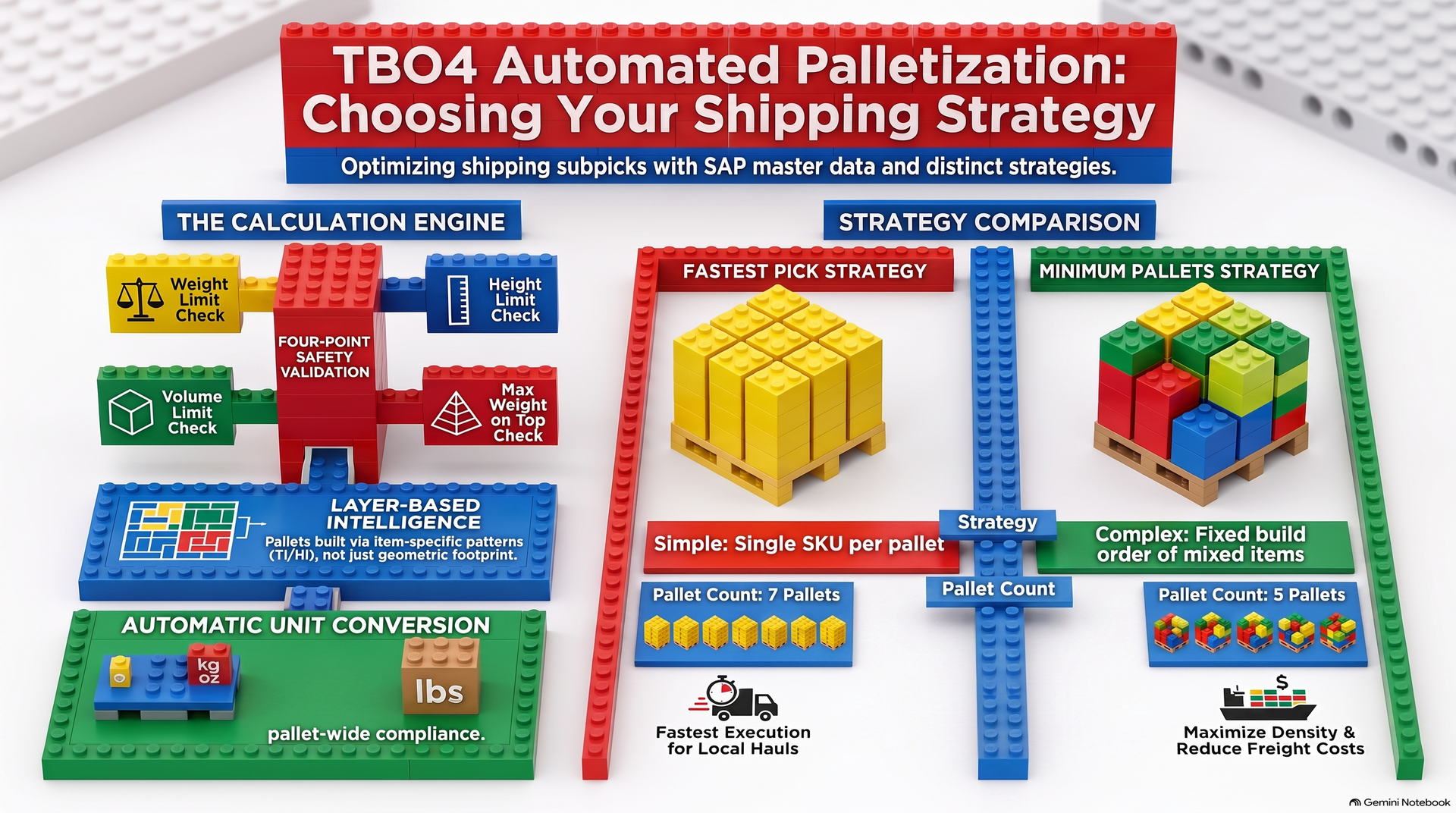
This is where TBO4 earns its place. It captures receiving and putaway as distinct scanned events with their own timestamps, so dock to stock falls out of the audit trail rather than needing a separate study. It holds stock at bin level with batch and serial detail, so record accuracy can be reported by location. Cycle counting runs continuously alongside normal work instead of shutting the site down. Short picks are captured in the pick itself. And because the data sits in one place with an open reporting layer over it, the numbers your planners need come out of the same system your operators are already using, rather than being reconstructed after the fact.
The point is not the software. The point is that inventory optimisation without accurate execution data is arithmetic dressed as insight. Get the measurement right and the optimisation mostly recommends itself.
If you take one thing away
Before you model anything, find out how long it really takes for stock to go from the back of a truck to being available to pick, and how much that number varies. If it surprises you, you have found your safety stock.
The RIC Group builds TBO4, a warehouse management system with integrated transport management, for mid-market manufacturers, distributors and wholesalers. If you want to talk through what your own dock to stock numbers are telling you, get in touch.