If your warehouse treats every shelf as though it costs the same to pick from, you are paying for it in labour every single shift, and it will never show up as a line on your P&L.
The fix is bin grading, and the idea is simple enough to explain in a sentence: rank your locations by how easy they are to pick from, rank your products by how often they move, then put the busiest products in the easiest locations.
Where people come unstuck is that both halves of that sentence get labelled A, B, C and D. Two different gradings, two different objects, same four letters. Sort that out first and everything else follows.
The two ABCs
ABC on the bin describes the location.
How quickly and easily a person or a piece of equipment can reach it. An A bin is an easy bin.
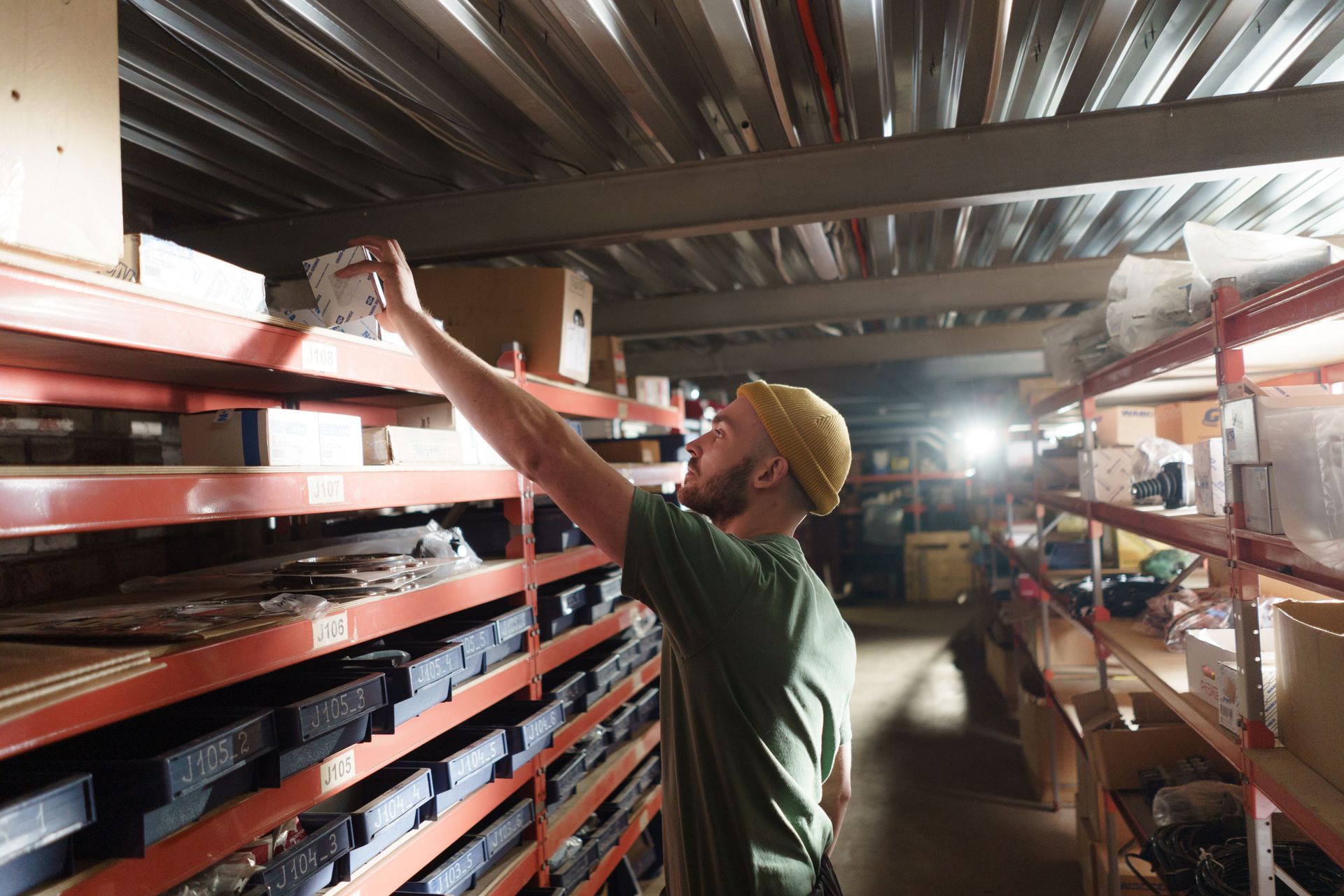
A Waist to chest height, close to dispatch. No bending, stretching or equipment.
B Knee to waist, or a little above shoulder. On a main aisle. Easy, with slightly more effort.
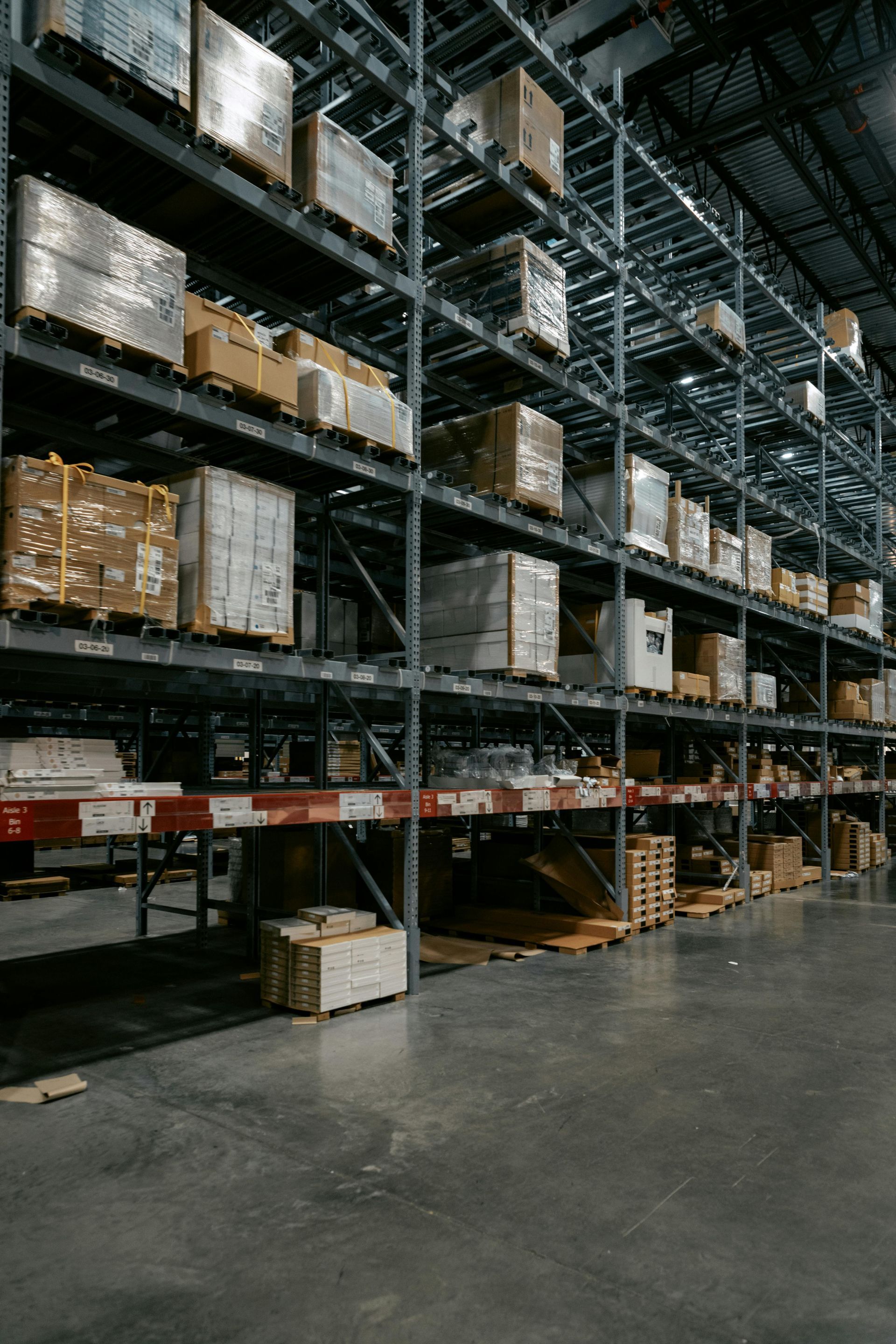
C Top shelves needing a step ladder, or low shelves needing a deep bend. Further back.
D Very high racking needing a forklift, rear corners, overflow. Most effort, most time.
ABC on the SKU describes the product.
How fast it moves. An A item is a fast mover, picked many times a week.
Slotting is nothing more than matching the two. A products into A bins, B into B, and so on. In a well-slotted warehouse the letters line up, which is exactly why they look interchangeable in writing even though they are measuring completely different things.
One piece of practical advice before going further. If you put a grade into a field in your WMS or ERP, write down which of the two it is. Six months later nobody remembers whether A meant "this location is easy to reach" or "a fast mover lives here", and those two stop agreeing the moment something gets slotted badly. At that point the field is not just unhelpful, it is actively misleading.
The trap: ABC on a SKU does not always mean velocity
Here is the part that catches people out, and it catches out experienced people too.
In almost every ERP, ABC classification on an item means
value. A items are the small share of SKUs that drive most of your annual consumption value. It is a Pareto analysis on dollars, and it exists to tell you where to focus cycle counting and working capital.
Slotting needs
velocity. Pick frequency. How many times someone physically walks to that location.
Those two diverge constantly. A high-value spare part is an A item in every system you own and has no business in your golden zone, because it moves twice a year. A cheap consumable picked forty times a day is a C item by value and belongs at waist height beside the packing bench.
So if your slotting plan came out of your ERP's ABC report, check which one it ran. Not because the report is wrong, but because it may be answering a different question. Value tells you what to count and what to fund. Velocity tells you where to put things.
Grading the bin: use two axes, not one
Most explanations of bin grading, including the table above, collapse into a single ladder where A means waist height
and near dispatch. Real racking rarely obliges. Try grading an actual aisle that way and you will stall in the first bay, because most locations are convenient on one dimension and awkward on the other.
There are two independent variables, and they are worth grading separately.
Travel band is horizontal distance from the pick face to dispatch. This is a shared cost. It is paid in metres walked, it compounds across every line on every order, and it dominates in a large building.
Pick level is vertical position. The golden zone is roughly waist to chest, reachable without bending, stretching or equipment. Below knee and above shoulder both carry a time penalty and an ergonomic one. This is a per-pick cost, and it is paid by the picker's body rather than by the clock.
Grade a location as a pair rather than a single letter. A near-dispatch top rack and a far-aisle golden zone are both mid-grade, and they are mid-grade for entirely different reasons. Treating them as the same thing is how a hand-picked line ends up in a forklift-only location.
Grading the SKU: velocity alone will fill your golden zone with the wrong stock
This is the most common mistake and the one people are most confident about. Rank by picks, put the top of the list in the best locations, done.
What that ignores is cube.
Golden zone locations are small. Put a fast-moving line that ships in a bulky carton into a small golden zone bin and you will be replenishing it three or four times a shift. Every one of those replenishments is a forklift trip, a task, a transaction and a chance to get it wrong. You have not saved labour. You have converted picker walking time into materials handling time, and depending on your equipment ratios you may have made the total worse.
The working metric is picks per unit of cube, not picks. This is not a new idea, incidentally. The classical slotting measure is the cube-per-order index, which ranks items by storage cube divided by order frequency and dates back to the 1960s. A small, fast-moving line earns a golden zone slot several times over. A bulky fast mover usually belongs in a full pallet position at floor level in the closest travel band, where a picker takes from the pallet face directly and nobody replenishes anything.
There is a third input that gets left out even more often: affinity. If two lines appear on the same order most of the time, putting them next to each other saves more than ranking them independently by velocity ever will. Where that correlation is strong, affinity should win.
Where the slow movers actually go
The common shorthand is fast at the front, slow at the back and up high. That is fine for a smaller site with a single pick face. It is not how a mid-size distribution operation is laid out, and repeating it as a universal rule causes real damage.
In a forward pick plus reserve model, the pallet positions directly above a fast mover's pick face hold that same product's reserve stock. They are not slow-mover storage. They are deliberately reserved so replenishment travel is close to zero. Get this wrong and the failure is expensive: you spot the space above your fastest lines as underused, fill it with slow-moving stock, and now every replenishment of your busiest product is a trip across the building.
While we are here, slow and obsolete are not the same thing. Slow-moving stock has a reason to exist and needs a home. Obsolete stock needs a decision, not a bin. A grading exercise is the ideal moment to tell them apart, because you are handling everything anyway.
What you actually get
Less travel. Travel is commonly around half of picker time in a manual picker-to-goods operation, and higher where pick faces are spread thin. It is the largest single component of the pick and the only one you can attack with layout alone. Worth noting this argument is specific to picker-to-goods. In a goods-to-person or automated environment the economics change completely, and slotting still matters but for different reasons.
Higher picks per hour. Less searching, less climbing, less waiting on equipment for routine lines. The gain compounds through the order rather than showing up once.
Better ergonomics. Not a soft benefit. Pick rates decay measurably across a shift when the work involves repeated bending and overhead reaching, so fatigue shows up in your throughput numbers whether or not you are measuring it directly. It also shows up in your injury rate, and eventually in your premiums.
Cleaner aisles. Concentrating volume near dispatch and pushing bulk and seasonal lines to upper and rear positions keeps main aisles clear. Congestion is a hidden tax that gets worse exactly when you can least afford it, which is during peak.
The setup, in five steps
- Grade your locations. Travel band and pick level, separately, for every location. This part only has to be done once properly.
- Pull pick frequency by line, not sales value. Twelve months of history, with seasonal lines looked at separately rather than averaged into the baseline.
- Get cube, or a usable proxy. If your item master does not carry dimensions, case quantity or unit of measure conversion will get you close enough. An approximation you actually use beats a precise figure you never collect.
- Rank by picks per cube, then adjust for affinity. Assign against the location map.
- Move only the top of the list. The highest-value moves deliver most of the benefit. Trying to move everything is how these projects die.
Re-slotting is a habit, not a project
Most warehouses do this exercise once, at go-live or after a fit-out, and never touch it again. Which means the layout on the floor today reflects the demand profile of the year they moved in. The products that mattered then are still in the golden zone. The products that matter now are up a ladder at the back.
The reason is not laziness. Re-slotting costs real labour up front and the payoff is invisible, because it shows up as a cost that did not happen. Nobody puts that in a board pack.
The answer is not an annual big-bang re-slot. It is a standing rule: every week, look at the handful of lines whose pick frequency has moved most, and relocate only where the projected labour saving over a sensible horizon beats the cost of the move. Ten moves a week done consistently will beat a thousand moves once every four years, and it never needs a project budget.
Demand moves continuously. A layout corrected only in bursts is wrong most of the time by definition.
Walk your twenty fastest-moving lines tomorrow morning. If more than a couple of them need a ladder, you already know what this is worth.